
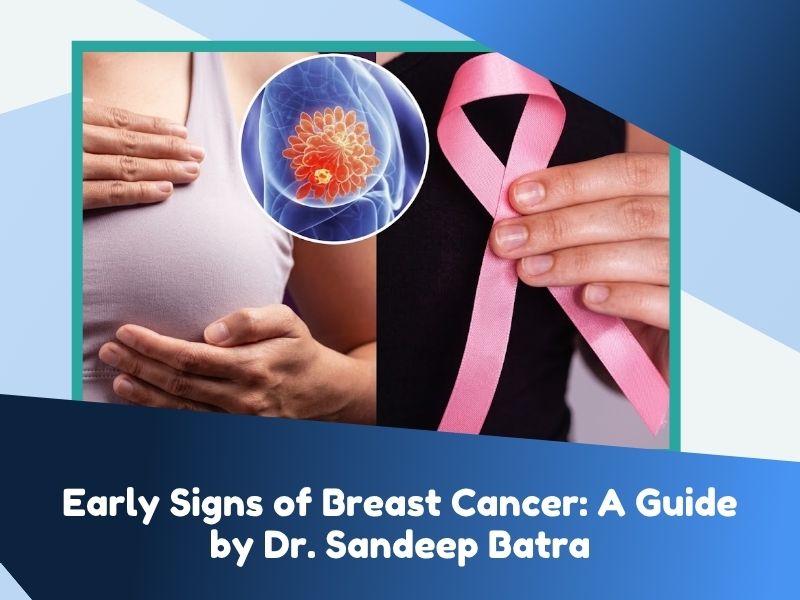
Breast Cancer is among the most prevalent cancers found in females across the globe, and early detection is a pivotal factor contributing to a successful treatment and recovery process. By knowing the early signs of breast cancer, individuals can request a medical evaluation sooner, thus maximising their chance of being diagnosed with the disease when it is at an early stage; however, not all breast changes will indicate the existence of breast cancer, and seeing early warning signs can assist in maintaining breast health and limiting one’s risk.
The following guide provides information about the most common early signs and symptoms of breast cancer, risk factors, the value of getting screened for breast cancer, and when you should contact your healthcare provider for further evaluation.
What Is Breast Cancer?
Breast cancer is the growth of abnormal cells in your breast and is referred to as a tumour in that area of your body. Tumours can occur in the milk ducts or lobules of the breast or surrounding areas. If left untreated, breast cancer will spread to the nearby lymph nodes and sometimes to other parts of your body. In many cases, breast cancer in its early stages will not cause pain; therefore, it is imperative that women get regular breast exams and be aware of changes that may signal abnormal growth.
What are the Common Early Signs of Breast Cancer?

- One of the early signs of breast cancer is usually the discovery that there are lumps or hard areas in one’s breast, as well as under the arms. A lot of times, these cancerous lumps feel like they have been growing; they are usually firm or hard, have uneven edges, and when they do feel painful, are quite different from any of the tissue around them. The majority of lumps are not cancerous; if you have a suspicious lump, it is best to visit an MD for an evaluation.
- You may also want to be aware of your breasts’ shape, size, and appearance. If you suddenly experience any changes to only one breast that are different from what you usually see, for example, if one breast seems to swell up or change in size.
- If your breast texture changes for any reason, it can indicate a disease that is causing these problems. Be alert for manifestations such as redness or swelling of the skin of the breast, puckering or dimpling of the skin of the breast and signs such as an orange-peel texture of the skin of the breast, and continuing itchiness or rashes in the region. Any of these changes could indicate an inflammatory breast cancer or other condition.
- The nipple area is another area that could be impacted by breast cancer. You should also pay attention to things that could have changed with your nipples. Some of the usual signs to alert you to the possibility of developing breast cancer would include: your nipple being inverted; any pain or tenderness associated with your nipple; abnormal discharge from the nipple, especially if the discharge has a bloody colour; or crusting or flaking around the nipple itself. Any of these events should be looked at by an MD immediately.
- While breast pain can often result from hormone-related changes or other non-cancerous reasons, you should contact your doctor if there is chronic pain in one or more areas of your breast and it does not resolve itself.
- In some cases, breast tumours can extend to nearby lymph nodes before there is any sign of a tumour in the breast itself. You should be careful of enlarged or thickened lymph nodes in your armpit or collarbone area, as both of these areas typically have enlarged lymph nodes.
- In some cases, breast cancers can produce symptoms that are not readily apparent, such as unexplained weight loss, fatigue, continual warmth in the breast, enlarged veins on the outer surface of the breast, and ulcers or sores on the breast. These same symptoms can be caused by numerous other diseases, but these should not be ignored.
- There are many different risk factors that increase your chances of having breast cancer, as indicated by family history of breast cancer, genetic mutations such as BRCA1 or BRCA2, older age, obesity, hormone replacement therapy, use of tobacco, use of alcohol, lack of exercise and early menstruation and/or later menopause. By understanding your own risk factors, you will be able to make better decisions concerning screening and prevention measures.
It’s vital to recognise the early stages of breast cancer in order to diagnose it early and treat it effectively. There are many visible symptoms of breast cancer, including lumps in the breast, changes to the nipple, indentation/dimpling on the skin, and any other unusual swelling in the breast tissue. Individuals should seek out regular screenings, regularly assess their personal health by monitoring for signs of breast cancer, and develop healthy habits for maintaining breast health to help decrease the risk of developing breast cancer. Detecting breast cancer early can help save your life, and being educated about breast cancer is one of the best things you can do to protect your health and well-being.