

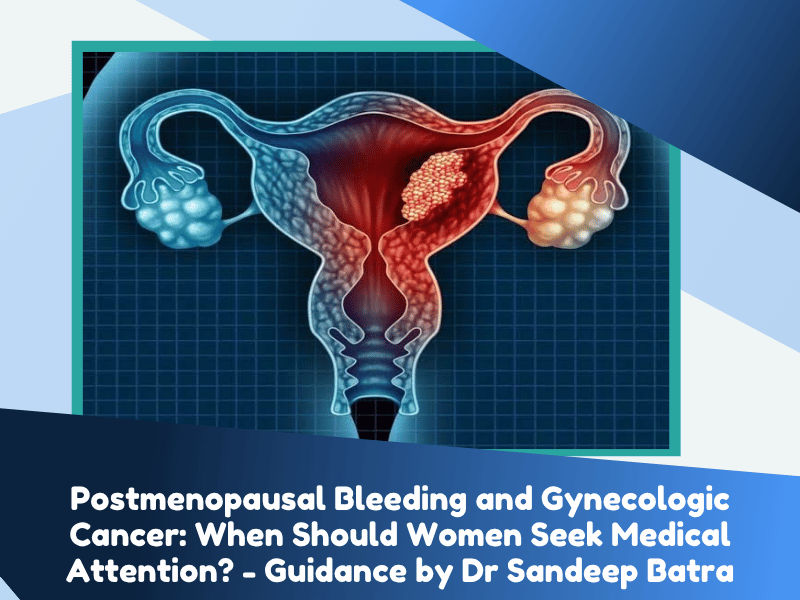
It can come as a shock to find that a woman has started bleeding after menopause, especially if she hasn’t been menstruating for a long time. Although this doesn’t necessarily mean that there is a cancer diagnosis, postmenopausal bleeding is not something to be ignored. This condition can in fact be associated with issues with the uterus, cervix, vagina and other areas of the reproductive system, including endometrial cancer. According to the American College of Obstetricians and Gynaecologists (ACOG), postmenopausal bleeding refers to bleeding believed to come from the uterus and occurring at least a year after the last menstrual period.
The new ACOG guidelines published in 2026 call for immediate evaluation of the situation, and the evaluation process should include examining the uterus through ultrasound as well as examining the tissue taken from the endometrium. Dr Sandeep Batra underscores how crucial it is to pay attention to unusual bleeding, noting that recognising the issue early on can ensure the appropriate treatment is initiated earlier.
What Is Postmenopausal Bleeding?
Postmenopausal bleeding signifies the occurrence of vaginal bleeding subsequent to the onset of menopause. Symptoms may include the following:
- Minimal vaginal spotting
- Light brown or pink discharge
- A slight degree of bleeding on toilet paper or underwear
- Menstrual bleeding
- Profuse vaginal bleeding
- Bleeding that occurs after intercourse
According to the NHS, any case of post-menopausal bleeding, even if it’s just a small percentage of blood loss or spotting, must be assessed by a physician, regardless of how minor the version of bleeding might appear to be.
Is Postmenopausal Bleeding Always a Sign of Cancer?
There are many reasons for bleeding after menopause that aren’t related to cancer. Some of the main reasons include the following:
- After menopause, low levels of oestrogen in the body can lead to the vaginal tissue and uterine lining becoming thinner. This can result in bleeding or spotting.
- Polyps are benign tumours that can appear in the cervix or uterus. They also sometimes cause bleeding from the vagina unexpectedly.
- Endometrial hyperplasia happens when the uterus lining expands too much. Some types can lead to endometrial cancer.
- Use of certain drugs or hormone therapies can also lead to vaginal bleeding. If bleeding occurs, a medical professional can determine if a drug is the reason behind it.
- Even though cancer is not usually the cause of bleeding after menopause, it is still an important reason to rule out. For instance, endometrial cancer, which usually leads to abnormal post-menopausal bleeding, should be considered.
Why Is Postmenopausal Bleeding Associated With Endometrial Cancer?

- Endometrial cancer arises in the lining of the uterus, and abnormal bleeding is its most common symptom.
- As reported by the American Cancer Society, abnormal vaginal bleeding or spotting, such as bleeding after menopause, is an important sign to be evaluated by a healthcare professional.
- Also, according to ACOG, around 90% of patients present with post-menopausal bleeding in pre-menopausal cancer, but this doesn’t mean that 90% of women bleeding after menopause are suffering from endometrial cancer.
What Tests May Be Needed?
- A pelvic examination aids in evaluating the vagina, cervix, and other reproductive organs and locating possible areas of bleeding.
- A transvaginal ultrasound uses an ultrasound probe to assess the uterus and determine the thickness and state of the endometrium.
- An endometrial biopsy means removing a small piece of the tissue from the uterus lining. It is analysed for abnormal or cancerous cells.
- In some cases, conducting hysteroscopy makes sense because this procedure lets you inspect the interior of the uterus with a scope. A dilation and curettage (D&C) could be done to gather tissue samples for testing. The latest ACOG guidelines suggest that transvaginal ultrasound and endometrial tissue sampling should be used for an initial investigation of women with postmenopausal bleeding.
It should be noted that there is no test at this time for postmenopausal bleeding that is used to screen for the disease. However, awareness of the symptoms of this condition will be more effective as an early detection mechanism.
Postmenopausal bleeding should never be taken lightly. Although the reasons behind the occurrences are often trivial, abnormal bleeding could potentially serve as an indicator of endometrial cancer or a situation that warrants further investigation. The only way to address any concerns is to reach out to a doctor or a gynaecologist for an evaluation of the current state of affairs. Some of the key procedures include pelvic examination, transvaginal ultrasound, and endometrial biopsy.
Dr Sandeep Batra states that paying more attention to the kind of changes in vaginal bleeding and reaching out to a medical professional for further directions is what is worth doing so to secure an opportunity to address various health issues in a timely.